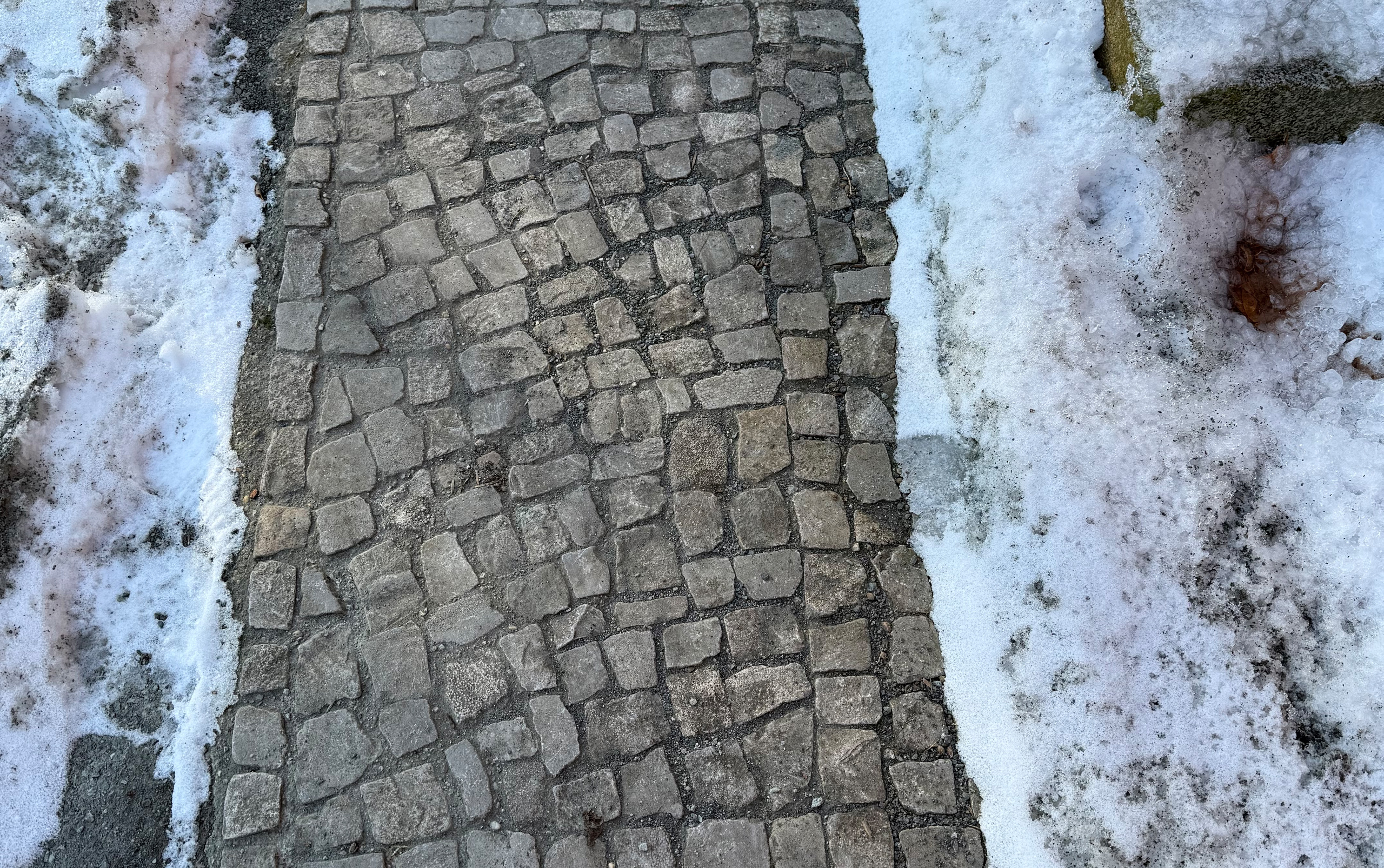
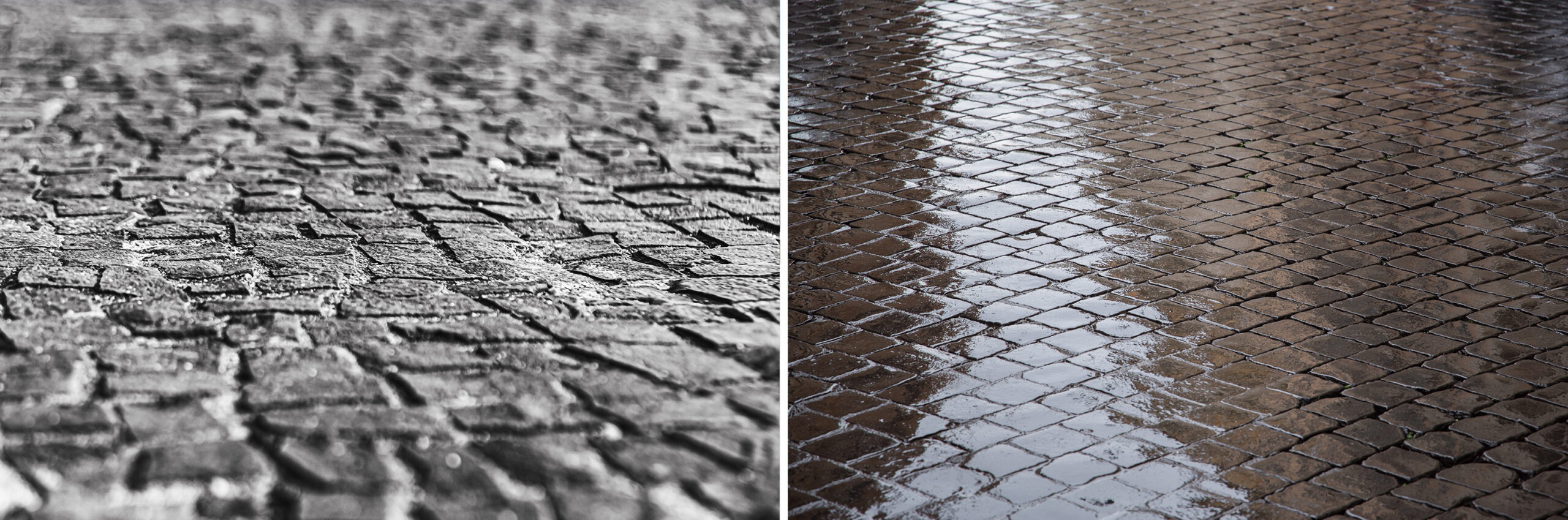
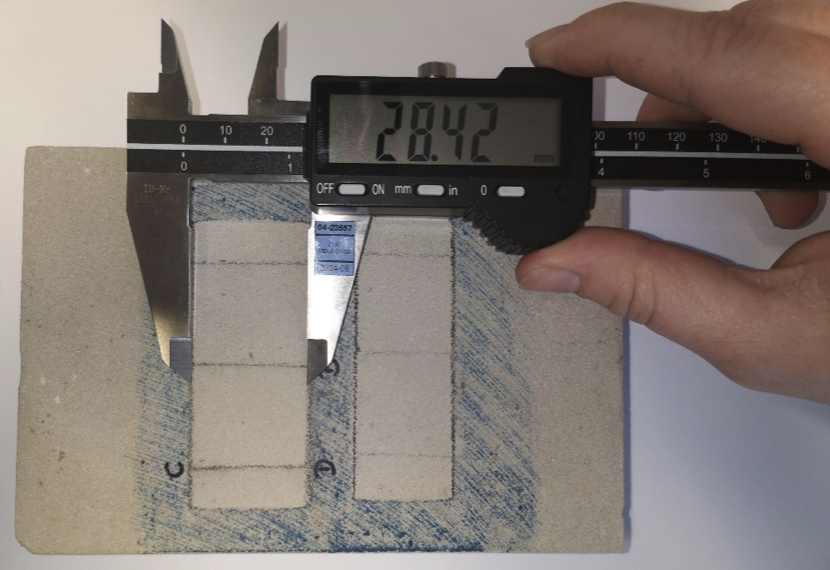
As the spring construction season gets ready to start, the reality on our streets currently shows its unvarnished face. Frost periods, snow and de-icing salts challenge infrastructure every day. During this period, it becomes clear: the choice of material is not just a design question. It is a strategic decision about safety, durability and the long-term value of our cities.
Tailored to the specific requirements of your project, BESCO provides advisory support, helping you select the ideal stone with the right technical properties for your application. Hardstones in particular are well suited for heavy winter loads.
Why belgrano® Hardstones Excel in Winter:
-
High Weather Resistance: Proven resistance to freeze-thaw cycles (according to DIN EN 12371:2010-07)
-
Resistance to De-Icing Salt: The dense structure makes the stone insensitive to de-icing salt used in winter maintenance (according to DIN EN 1367-6).
- Tested Slip Resistance: Ensures optimal grip in wet and icy conditions (DIN EN 16165:2021 and DIN EN 14231)
Cause and Effect: The Principle of Frost Resistance
The alternation between night frost and daytime thaw is one of the greatest stresses for outdoor surfaces. The problem lies in physics: water expands by about 9% when it freezes. In a water-saturated, closed pore system, this generates enormous stresses that can damage the material from the inside.
belgrano® hardstones such as granite, gabbro or gneiss are characterized by a dense, fine-porous structure with very low water absorption. As a result, a critical water saturation level is generally not reached during use. During frost, any remaining water can expand into existing, unsaturated pore spaces without creating damaging internal pressure in the stone matrix. Unlike capillary-active, water-saturated materials, the structural integrity of belgrano® hardstone remains intact even under repeated freeze-thaw cycles.

Value Preservation Despite Aggressive Winter Maintenance
A look at many sidewalks in late winter often reveals crumbling surfaces and white residues. The use of de-icing salt is essential for traffic safety, but it imposes considerable stress on many building materials.
Especially cement-bound pavements suffer chemical-physical damage in the binder matrix from repeated contact with salt-laden moisture. At the same time, de-icing salt increases the number of critical freeze-thaw cycles, as it delays ice formation and makes meltwater available. For more porous materials, this raises the water saturation level, while evaporating saltwater additionally exerts destructive crystallization pressure in the pores.
belgrano® hardstones counter these stresses through their natural composition. Their extremely high density largely prevents the penetration of salt-laden moisture, preserving the stone’s structural integrity. This durability is confirmed by tests according to DIN EN 1367-6, making granite, gabbro & co. the ideal choice for areas subjected to intensive winter maintenance.
Permanent Slip Safety Instead of Temporary Coatings
Natural stone carries slip resistance practically in its DNA. It would be unrealistic to claim that natural stone eliminates all slip risk during freezing rain. Mechanical treatments – such as flaming or bush-hammering – create a permanent micro-roughness on the mineral crystals. In practice, this provides two key advantages:
-
Interlocking: Unlike smooth surfaces, the treated mineral edges offer the shoe sole (or grit) additional friction points even in wet or lightly frosty conditions.
-
Durability: While artificial anti-slip coatings wear off over time due to shoveling and de-icing salt, the roughness remains anchored within the stone itself. Tested slip-resistance values thus remain stable for years, making the risk for municipalities more predictable.
Key Tests for Winter Durability
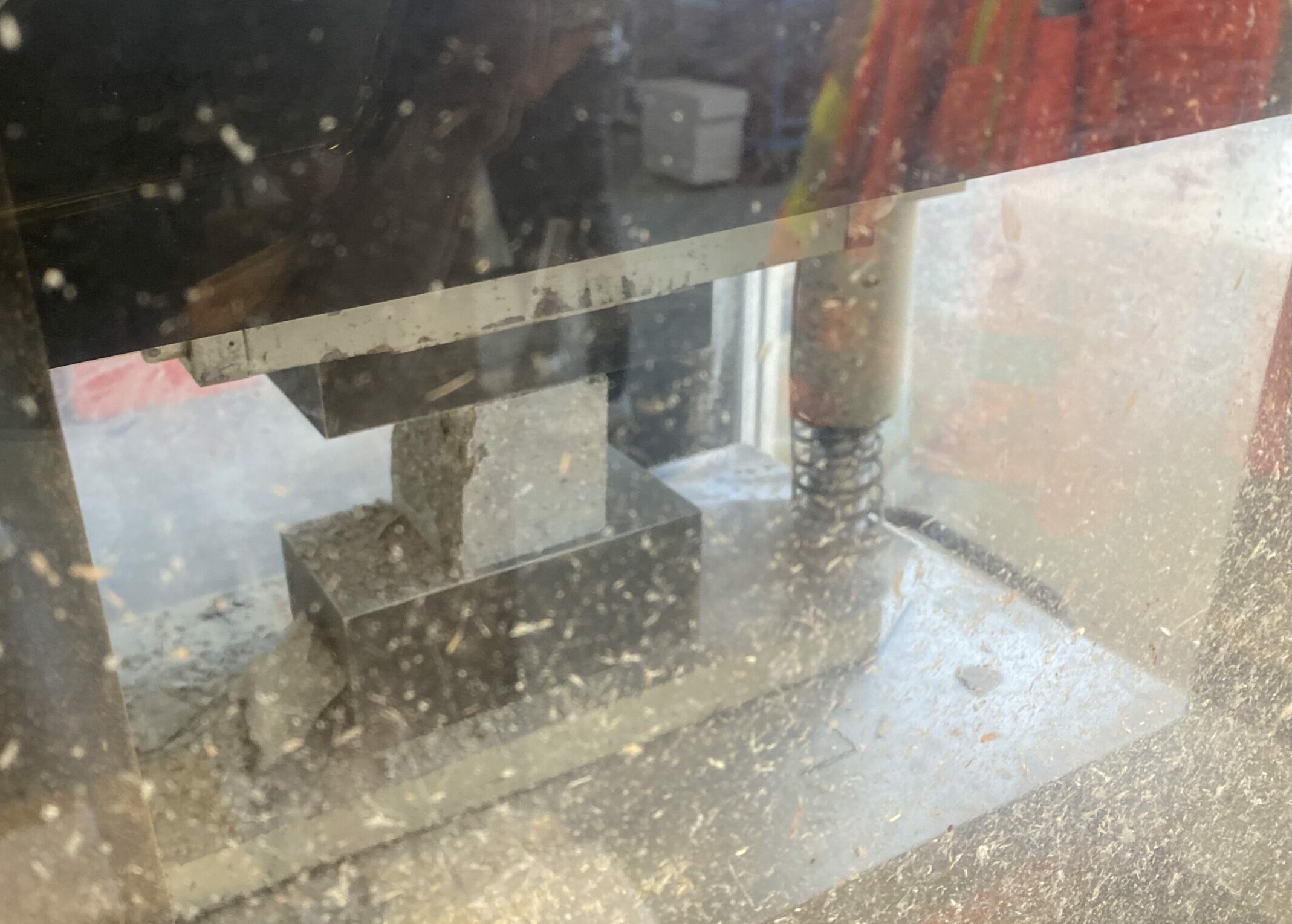
To ensure that outdoor surfaces can withstand the stresses of frost and de-icing agents, specific proofs are essential. In our Natural Stone Testing Info Series, we explain the technical basics that are crucial for safe planning in winter:
-
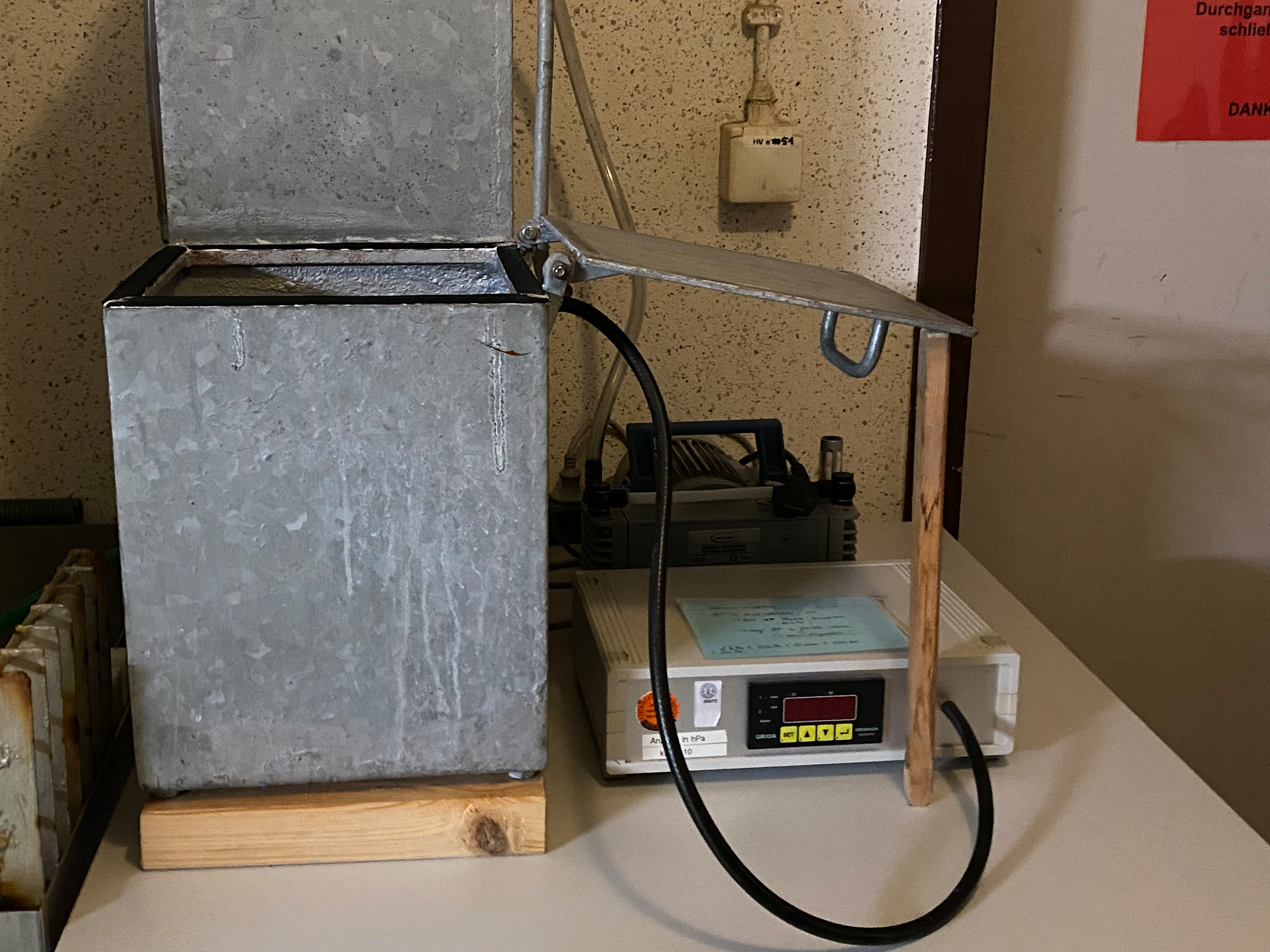
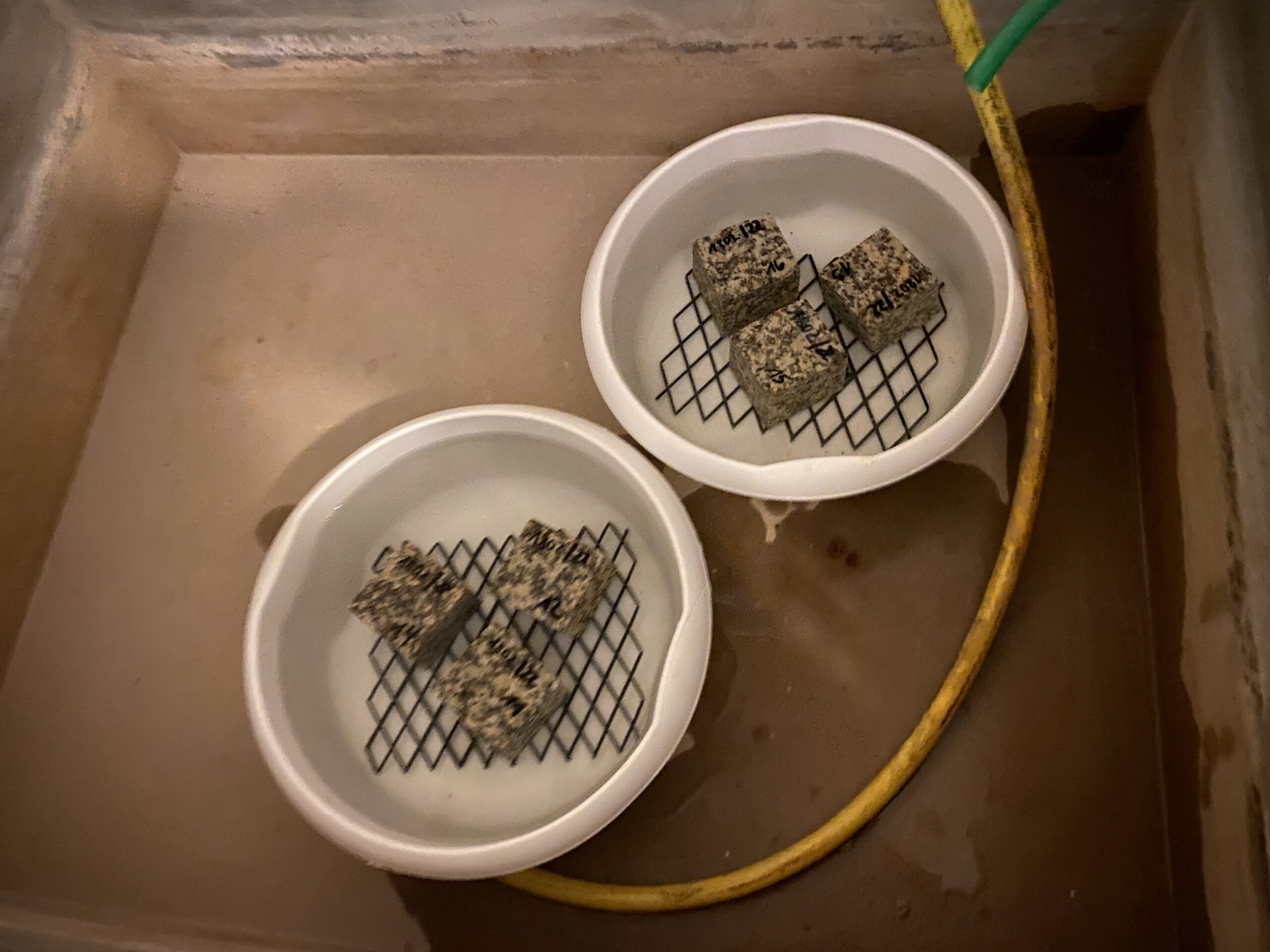
Frost Resistance (DIN EN 12371): The most important proof for the cold season. Learn how stones must demonstrate resistance to spalling and cracking through up to 168 freeze-thaw cycles.
-
Water Absorption (DIN EN 13755): Crucial for frost resistance. Determines whether a stone remains stable at subzero temperatures or is damaged by freezing water.
-
Slip Resistance (DIN EN 16165): Safety in wet and icy conditions. Why proper surface treatment and standardized testing (e.g., pendulum or inclined plane) are essential for accident prevention in winter.
-
Petrography & Terminology (DIN EN 12407): Analysis of the stone structure. How thin-section microscopy under polarized light ensures that the mineral composition withstands stresses.
Would you like to explore the technical specifications for your project in more detail? We support you in selecting suitable natural stones and surface treatments for winter requirements. Contact us by phone or email or schedule an online consultation.