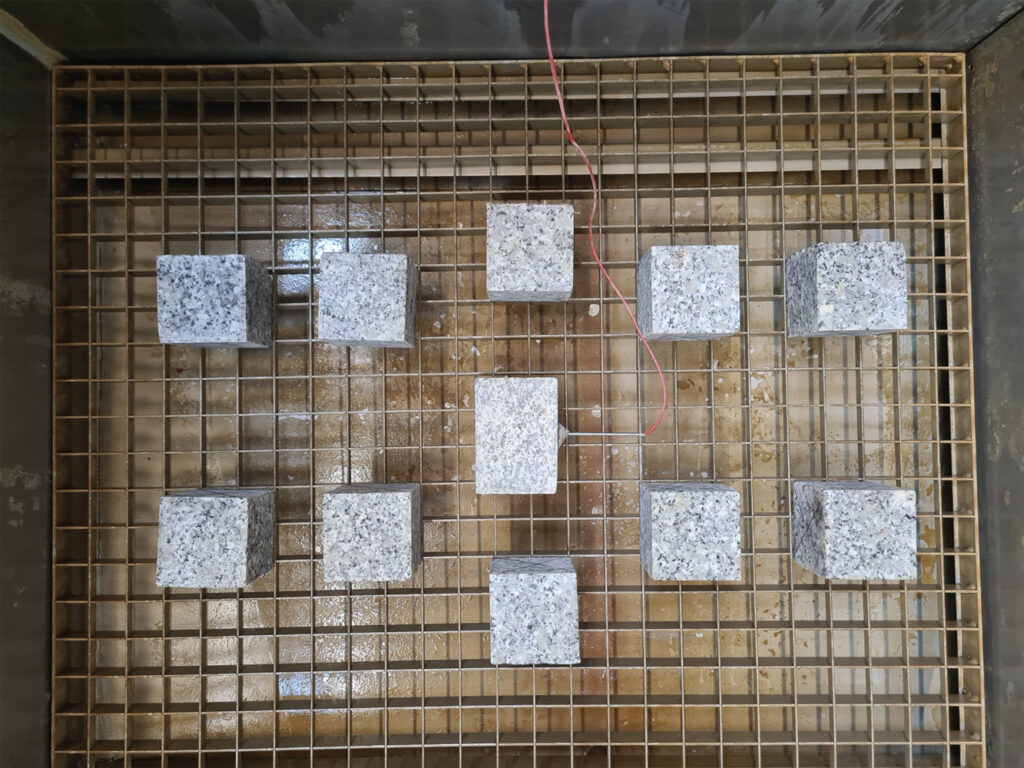
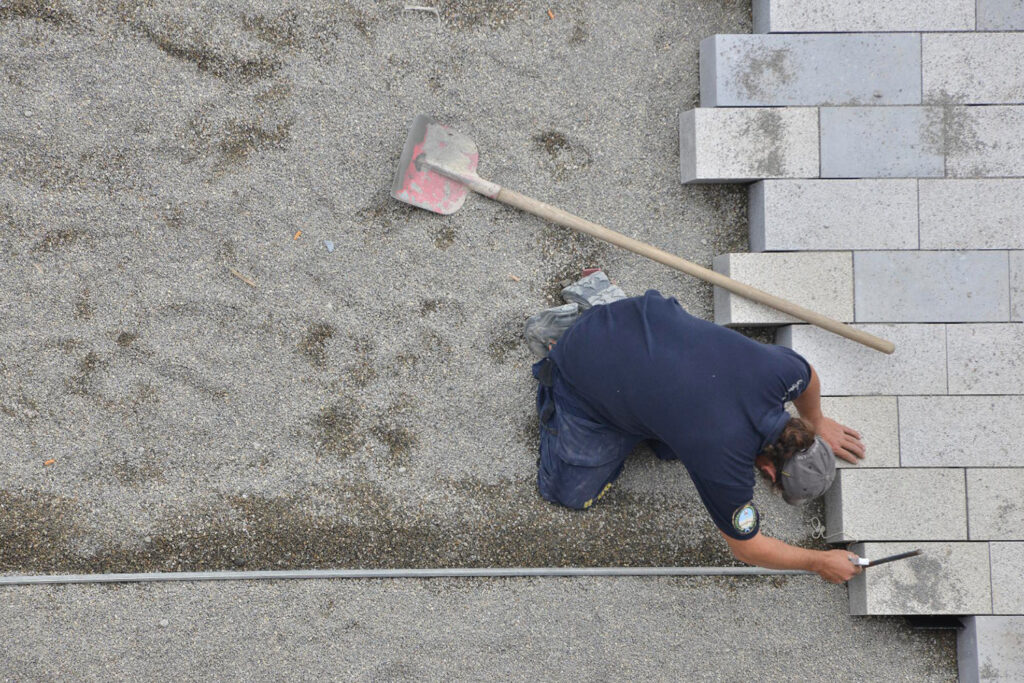
Granites and other hard stones are very durable by nature and therefore ideally suited as paving material. It is not uncommon for paving stones to last several hundred years. Professional maintenance can also considerably extend the lifespan of a paved surface.
In professional circles, maintenance is understood to mean the preservation of the serviceable condition. For the builder-owner or the maintenance contractor, the maintenance obligation begins at the time of the handover (with the exception of measures taken to remedy defects within the warranty period).
CARE & CLEANING OF NATURAL STONE
This is how proper care, cleaning and maintenance are carried out
Regular visual inspections, at least once a year, are necessary for proper maintenance in order to identify and implement necessary measures. This includes the following:
Joint maintenance depending on the construction method
Replacement of broken or damaged stones
Maintaining the functionality of the edging
Rectification of subsidence
Maintaining water drainage on the surface
Maintaining the functionality of drainage facilities
Maintaining slip resistance
The joints are the key
An essential maintenance measure in unbound construction is the maintenance of fully filled joints. Fully filled joints transfer horizontal and vertical forces better, conduct less surface water downwards and prevent excessive green growth. This also depends on the use of the right joint material.
belgrano® pavement – city square Schönebeck
Patina – natural character of natural stone
Weathering (rain, wind, sun, frost) naturally cleans surfaces with sufficient slope of impurities such as dust and the like. This creates a patina, which is the natural character of natural stone surfaces. Additional cleaning should therefore be carried out with a sense of proportion. Manual cleaning with water is often sufficient to remove dirt. This is also recommended for unbound construction until the natural consolidation of the joint filling, so that the joint filling is not swept out or sucked out. Missing joint material should be replaced.
In the case of persistent debris such as plant residues of the surrounding vegetation, tyre wear, engine oil stains, oxidation residues of metals or food residues, it is recommended to contact a cleaning company with the necessary expertise. The choice of cleaning methods must be made in accordance with the types of soiling, the sensitivity to soiling, the construction method and the paving material. It is recommended to test the cleaning method on a small area in advance.
Otto square in cologne at night
Overview of cleaning methods
Manual cleaning
Manual cleaning can be done dry by sweeping or wet by washing and brushing. The cleaning performance with natural soiling is increased by using warm water. The use of wet vacuum cleaners improves the result when washing. Metal brooms and brushes should not be used because of the formation of rust due to iron residues of the abrasion or discolouration of the surface. Washing the surface with a high-pressure cleaner must be adapted to the paving material and the construction method (the specifications of the equipment manufacturer must be followed). The parameters such as pressure, distance, angle and type of nozzle should be selected in such a way that changes to the surface are avoided. If joint material is removed during the washing process, it must be refilled. Unwanted joint growth should be removed manually on a regular basis.
Joint fouling in unbound pavement construction
Mechanical cleaning
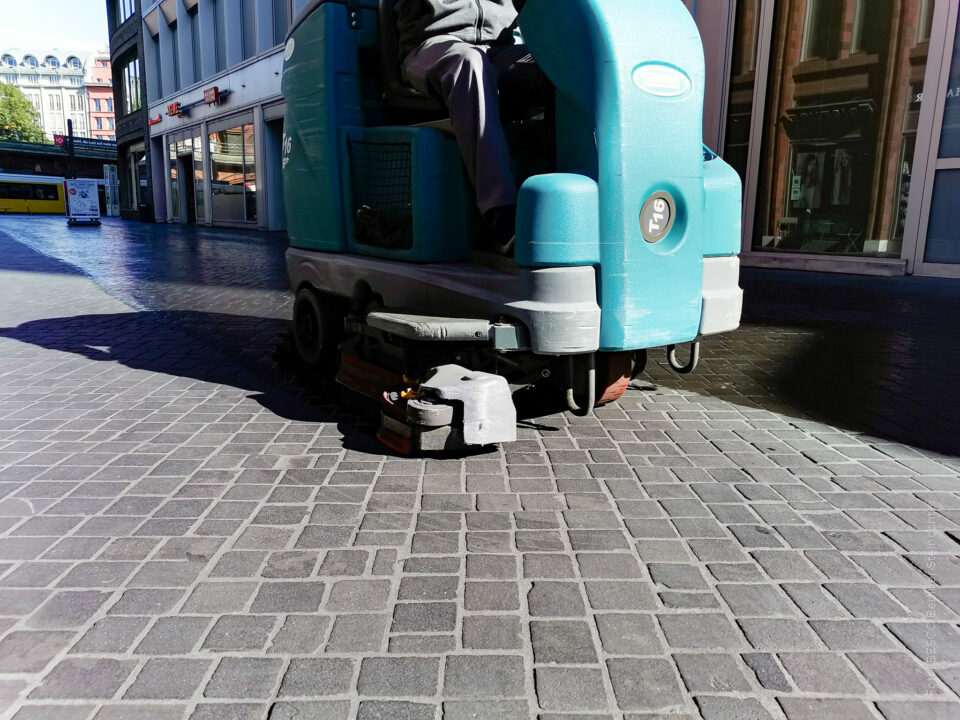
The use of power-driven sweeping and cleaning machines must be adapted to the paving material and the construction method. Attention should be paid to the following characteristics:
Adjustable suction power
Inclined and flat alignment of the suction mouth
Adjustable brush pressure
Brush type (no metal bristles)
Adjustable water pressure
In the case of unbound joint filling, the contact pressure of the brushes, the regulation of the suction power and the alignment of the suction nozzle must be set in such a way as to largely prevent the joint filling from being carried away. The direction of sweeping should be as diagonal as possible to the direction of the joint. Missing joint material should be replaced.
Mechanical cleaning of a pavement
Chemical cleaning
Due to the mineralogical composition of natural stone, it is recommended to contact the building materials supplier or appropriate cleaning specialists if chemical cleaning is necessary.
Do you have a specific project and questions about care and cleaning? Use our online consulting for quick and straightforward advice.
–
subscribe newsletter
We would be happy to inform you about the latest topics and innovations relating to natural stone.
ARTICLES ABOUT THIS TOPIC
discover more articles on the topic -
technical information
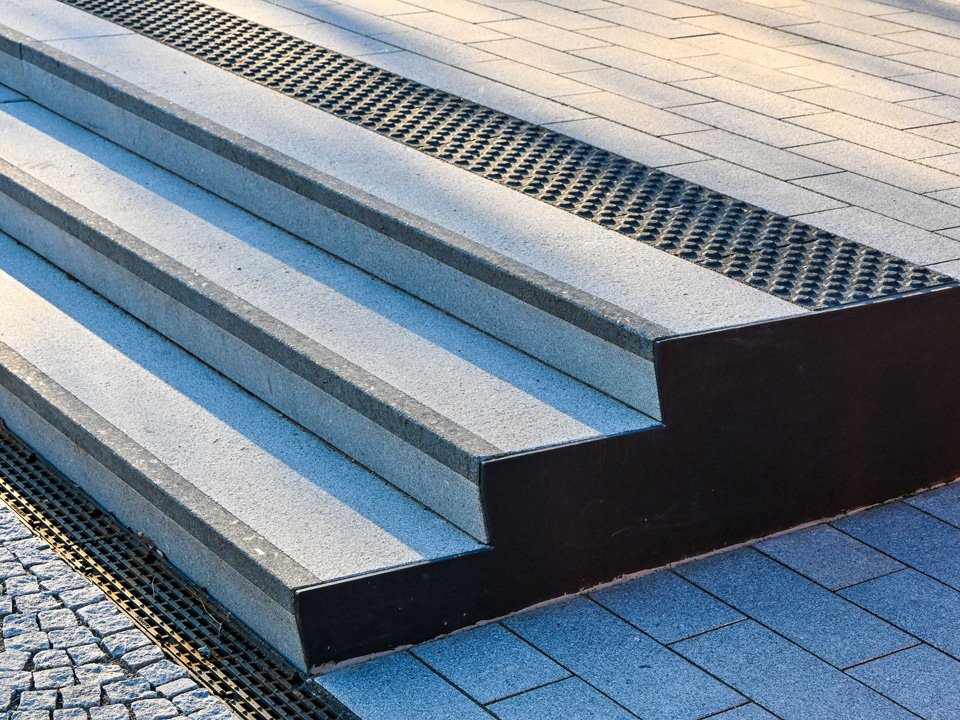
Designing Accessible Stairways with belgrano® Natural Stone
reading time – 4 min
Following our articles on walkability and accessibility and on tactile guidance systems, the third part of our series on accessibility focuses on the specific requirements for staircases made of belgrano® natural stone.
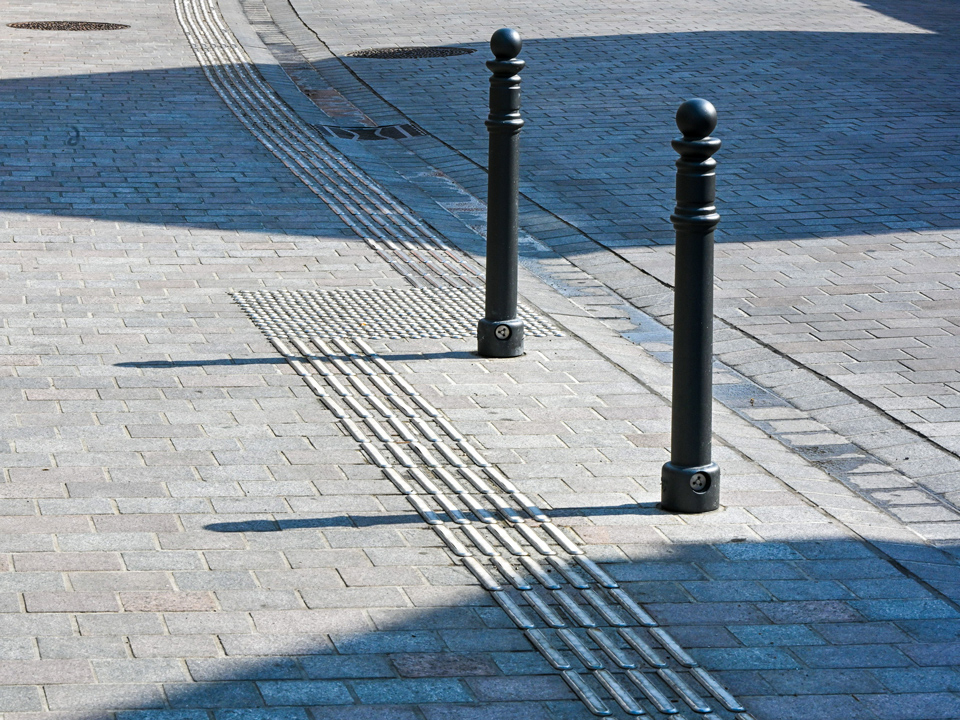
The Core Parameters of Barrier-Free Surface Design: Tactile Guidance Systems with Natural Stone
reading time – 3 min
Accessibility in outdoor spaces begins with one essential principle: pathways must be easy, safe and intuitive to use, enabling everyone to move through public spaces independently and without unnecessary barriers. Following the first part of our technical series, "The Core Parameters of Barrier-Free Surface Design: Accessibility and Navigability with Natural Stone", this article focuses on tactile guidance systems.
The Core Parameters of Barrier-Free Surface Design: Accessibility and Navigability with Natural Stone
reading time – 8 min
Barrier free outdoor spaces are fundamentally about one thing: routes must be easy, safe and free from unnecessary obstacles. This applies to wheelchairs as well as pushchairs, bicycles, skateboards and everyday walking in later life. What matters most is a calm surface, a precise joint pattern and a design that supports movement in an intuitive way.
As part of our series on accessibility, this article looks at the technical parameters that allow designers to specifically improve the walkability and rollability of natural stone surfaces. Even the direction of the paving pattern can have a decisive impact on how comfortable a public space feels for users of mobility aids, pushchairs or other wheeled movement systems. When natural stone paving is laid in the direction of movement, rolling resistance is noticeably reduced. At the same time, impact from crossing joints is significantly minimised.
Natural Stone in Winter: Why belgrano® Withstands Frost and De-Icing Salts
reading time – 5 min
Hardly any season tests materials as rigorously as winter. The alternation of frost and thaw makes it clear that durability is no coincidence, but the result of the stone’s physical properties and precise surface treatment.
Petrographic testing and terminology of natural stone according to DIN EN 12407 and DIN EN 12670
reading time – 8 min
Petrographic analysis is, so to speak, the DNA or fingerprint of a natural stone. In this part of our INFO series on natural stone testing, we show how this test procedure works and what information it provides about the stone.
RStO 12/24: Changes to the guidelines for the standardization of the superstructure of traffic areas
reading time – 3 min
The Federal Ministry for Digital and Transport issued a new General Circular Road Construction No. 2/2024 on January 30, 2024. This concerns the guidelines for the standardization of the superstructure of traffic areas, 2012 edition, which are now available in the 2024 version (RStO 12/24).
Wir nutzen Cookies zur Optimierung dieser Website. Mit Ihrer Zustimmung verarbeiten wir Daten wie Surfverhalten und IDs. Ohne Zustimmung kann die Funktionalität eingeschränkt sein.
Funktional
Always active
Die technische Speicherung oder der Zugang ist unbedingt erforderlich für den rechtmäßigen Zweck, die Nutzung eines bestimmten Dienstes zu ermöglichen, der vom Teilnehmer oder Nutzer ausdrücklich gewünscht wird, oder für den alleinigen Zweck, die Übertragung einer Nachricht über ein elektronisches Kommunikationsnetz durchzuführen.
Präferenzen
Die technische Speicherung oder der Zugriff ist für den rechtmäßigen Zweck der Speicherung von Präferenzen erforderlich, die nicht vom Abonnenten oder Benutzer angefordert wurden.
Statistiken
Die technische Speicherung oder der Zugriff, der ausschließlich zu statistischen Zwecken erfolgt.Die technische Speicherung oder der Zugriff, der ausschließlich zu anonymen statistischen Zwecken verwendet wird. Ohne eine Vorladung, die freiwillige Zustimmung deines Internetdienstanbieters oder zusätzliche Aufzeichnungen von Dritten können die zu diesem Zweck gespeicherten oder abgerufenen Informationen allein in der Regel nicht dazu verwendet werden, dich zu identifizieren.
Marketing
Die technische Speicherung oder der Zugriff ist erforderlich, um Nutzerprofile zu erstellen, um Werbung zu versenden oder um den Nutzer auf einer Website oder über mehrere Websites hinweg zu ähnlichen Marketingzwecken zu verfolgen.