Fugues, Formats and Surfaces: Key Parameters of Barrier Free Surface Design
High demands on accessibility and movement comfort are now an integral part of contemporary urban design, as defined by DIN 18040-3 and the German Sustainable Building Council assessment system (BNB). While the standard provides the technical basis for low vibration, weather resistant walking and rolling surfaces as well as tactile guidance systems, the BNB framework anchors barrier free access as a key quality criterion for the social and cultural performance of outdoor spaces.
Whether a natural stone surface can be used safely and comfortably depends primarily on its construction. Every joint interrupts movement and creates small impacts that influence comfort. Large format natural stone slabs significantly reduce these transitions and create calm, continuous surfaces for everyday use.
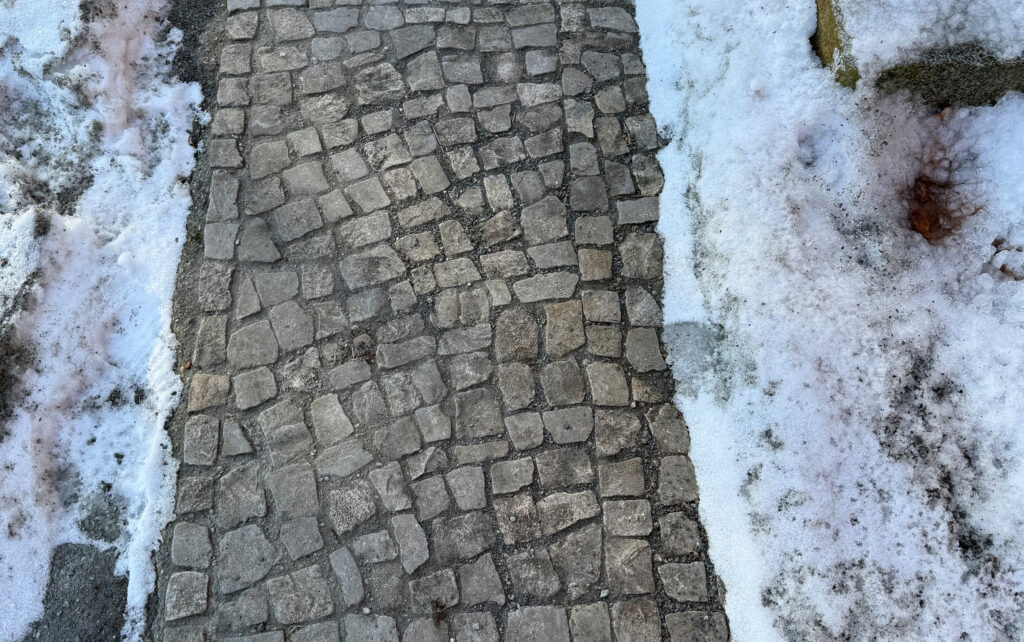
Even smaller formats can today be executed with far greater precision than traditional cobblestone paving. Fully sawn stones allow exact edges and narrow joint patterns, resulting in more homogeneous surfaces with reduced rolling resistance.
Beyond joint geometry, surface finishing plays a key role. Precisely treated surfaces ensure a consistent visual and functional performance. Techniques such as flaming or shot blasting create fine surface textures that improve slip resistance and walking safety without compromising movement comfort.
Option 1: Large Format Slabs
The use of large format natural stone slabs significantly reduces the number of surface transitions, creating smoother and more even movement areas.
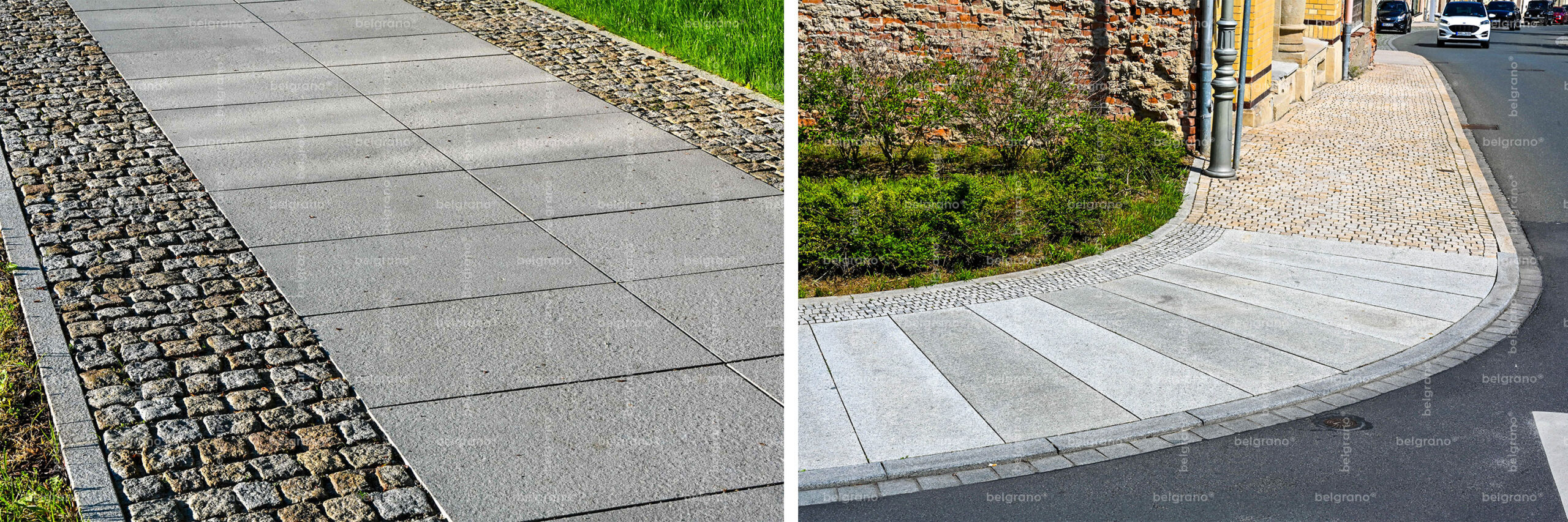
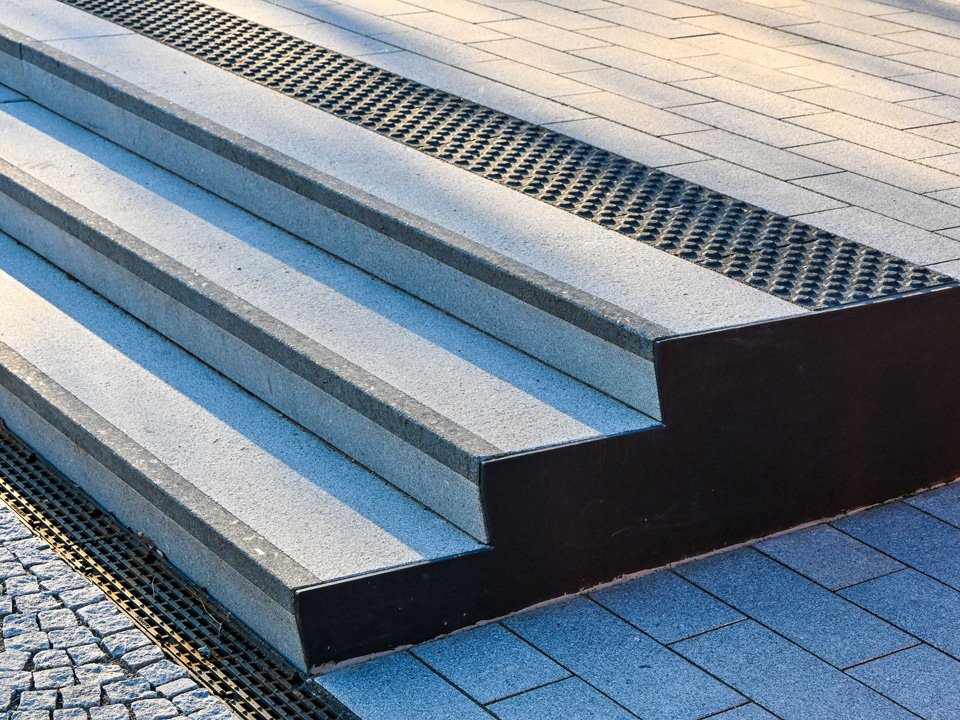
In the redevelopment of the outdoor spaces at the Fritz Förster Building of the Technical University of Dresden, designed by Rehwaldt Landscape Architects, large format paving slabs, block steps and paving areas made of belgrano® natural stone by BESCO were used. The combination of granite, basalt and gabbro integrates naturally into the listed campus and also improves accessibility through calm, easy to walk and roll surfaces.

Barrier free outdoor spaces using large format belgrano® natural stone slabs. Reference projects: Fritz Förster Building Dresden and Schmöllnsche Vorstadt Altenburg
This approach also proves successful in traditional urban streetscapes. In the Schmöllnsche Vorstadt in Altenburg, large format belgrano® slabs create calm pedestrian routes and a clearly legible, barrier reduced spatial structure within the historic fabric.
Option 2: Small Format Slabs
Small format natural stone slabs, when produced with fully sawn edges, allow for precise joint patterns and significantly improve walking comfort compared to traditional setts. They are particularly suitable for highly frequented urban environments.
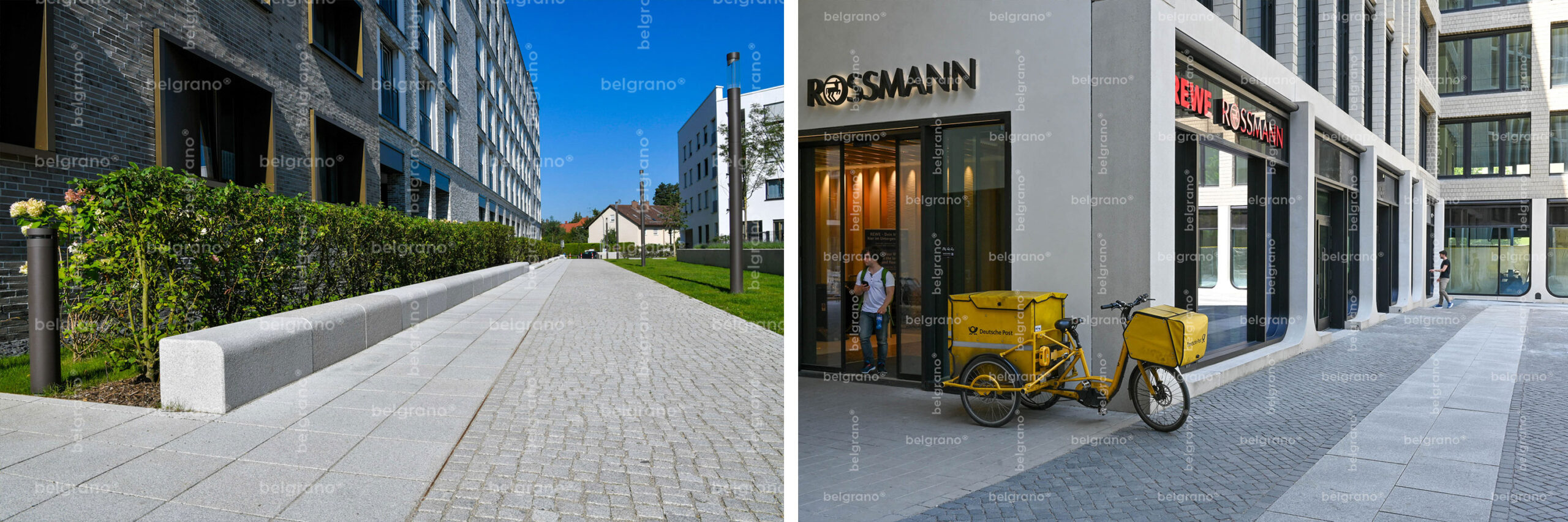
A representative example is the AM TACHELES district in Berlin Mitte. The landscape design by Vogt Landscape Architects organises the area through squares, courtyards and passages into a clearly structured urban space. belgrano® natural stone by BESCO was used in small format basalt and granite elements. Centrally arranged stone bands create calm movement corridors and improve usability for different forms of mobility.
Barrier free outdoor spaces using small format belgrano® natural stone slabs. Reference projects: Meiller Gärten Munich and AM TACHELES Berlin
A comparable approach was implemented in the Meiller Gärten in Munich, where precisely laid small format stones form linear movement zones with a highly consistent surface appearance.
Option 3: Small Setts with Sawn and Finished Surfaces
This solution combines the expressive character of historic urban pavements with today’s requirements for accessibility and comfort. Even small setts can be technically refined to meet heritage constraints.
While traditionally split setts naturally create irregular surfaces, sawn top faces enable significantly smoother movement areas. This reduces joint edges and minimises vibration during passage.
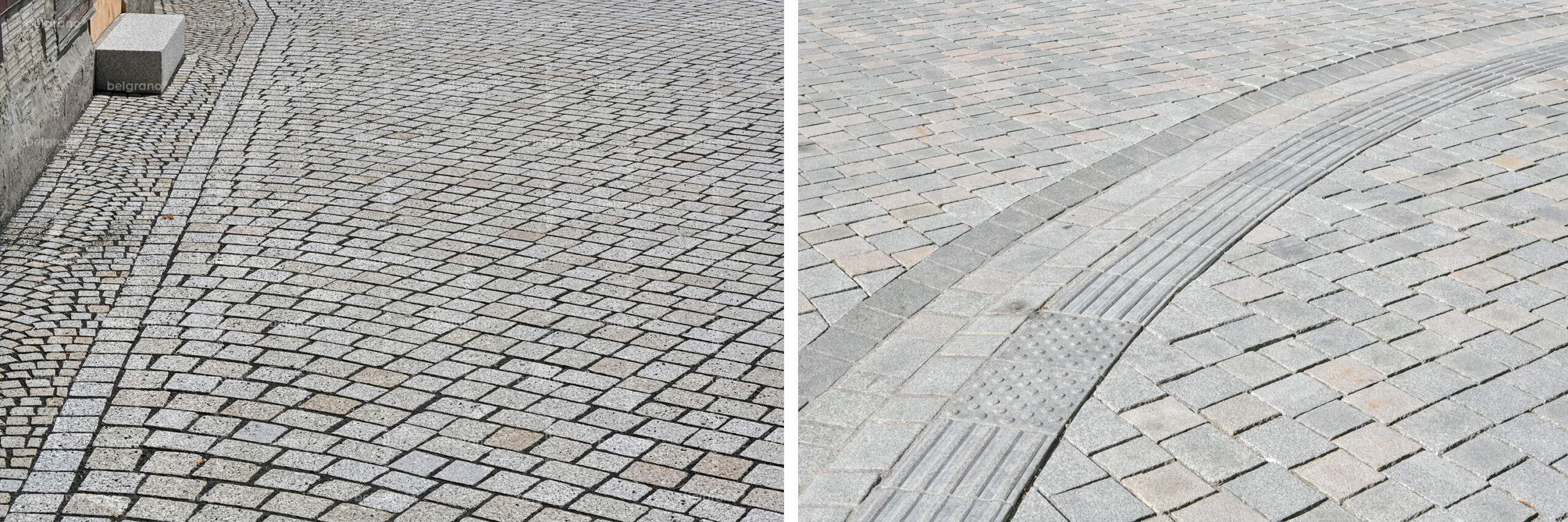
A strong example is the redevelopment of the Viehmarkt in Römhild. The use of belgrano® small setts with sawn surfaces preserves the historic identity of the site while significantly improving usability and comfort.
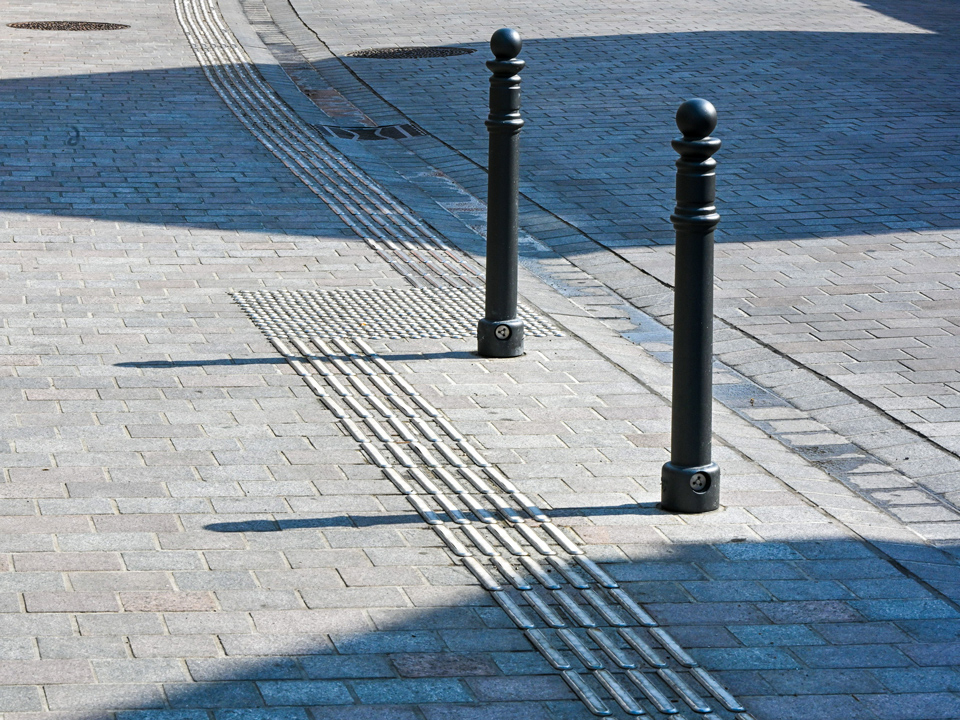
belgrano® small setts with sawn and finished surfaces. Reference projects: Viehmarkt Römhild and Stadtpark Kempten
In Stadtpark Kempten, this approach is applied within a contemporary green space design. Sawn setts and tactile elements work together to form a continuous, barrier reduced guidance system.
Option 4: Fully Sawn Setts with Finished Surface
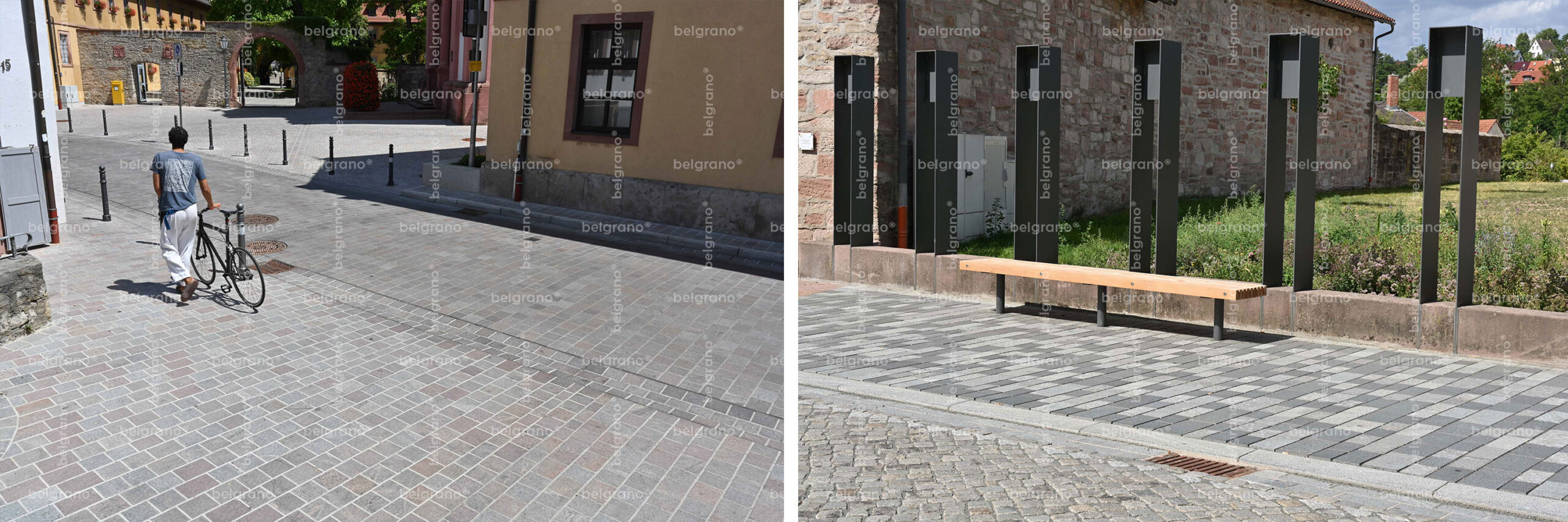
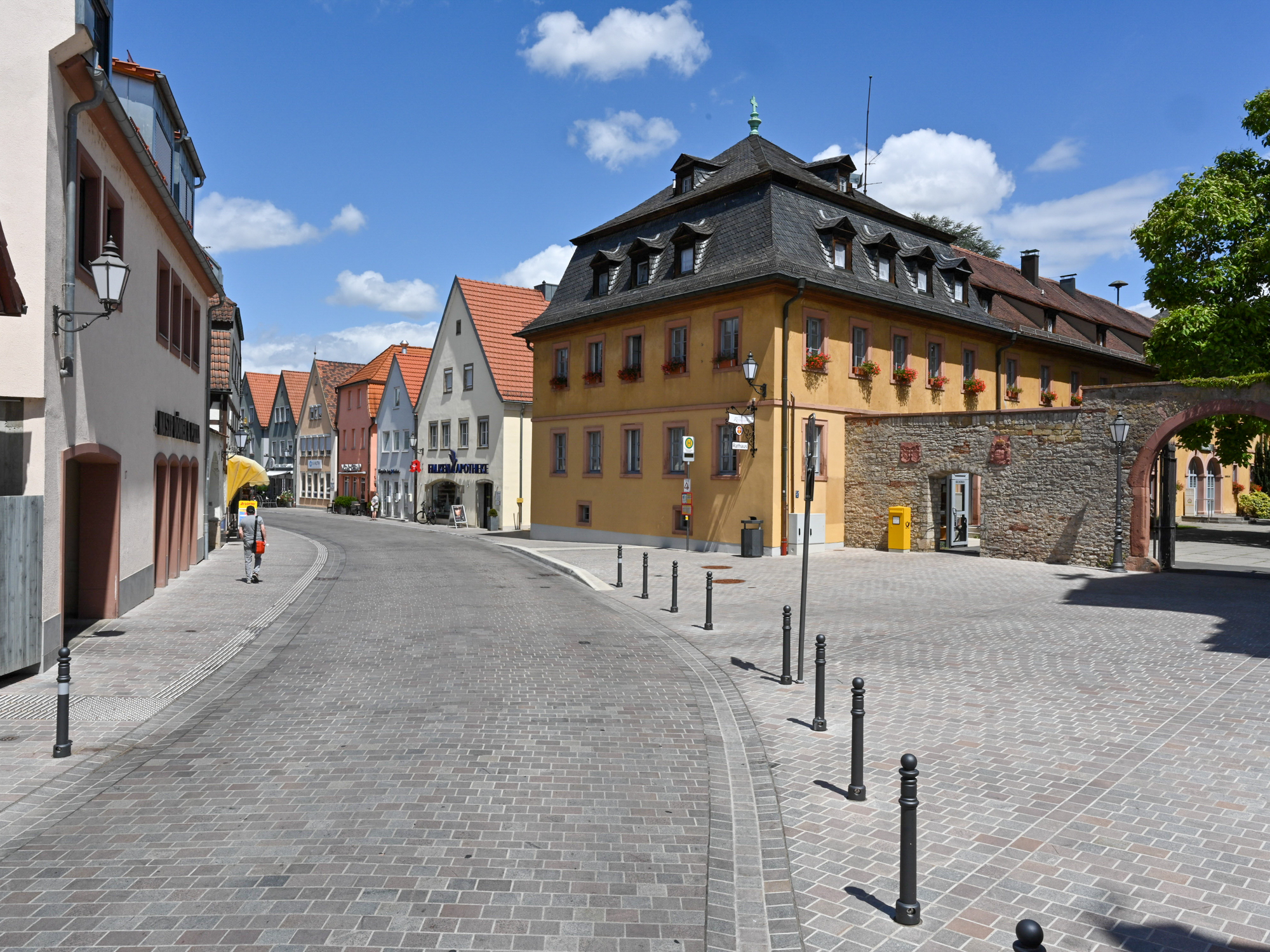
In this highest level of precision, all six faces of each stone are machine sawn. This enables extremely tight joints and a near continuous surface with minimal rolling resistance. At the same time, edge stability and durability are significantly improved.
A practical example is the historic centre of Veitshöchheim. Designed by Holl Wieden Partnerschaft, fully sawn belgrano® granite setts by BESCO were installed in a bound construction method. The result is a highly accessible surface capable of handling intensive bus and delivery traffic while maintaining a high quality appearance.
belgrano® fully sawn setts with finished surface. Reference projects: Veitshöchheim and Weidenbrunner Gasse Schmalkalden
The Weidenbrunner Gasse in Schmalkalden further demonstrates the quality of this construction method within a heritage context. The design by TERRA.NOVA Landscape Architecture combines historic preservation with modern functional requirements. The precise stonework enables a calm, barrier reduced surface character.
Conclusion: Natural Stone in the Service of Inclusive Urban Design
The walkability and accessibility of natural stone surfaces is less a question of material than of execution quality. belgrano® natural stone systems by BESCO demonstrate that high end design and barrier free performance are not contradictory. When properly designed and executed, these surfaces meet the requirements of DIN 18040-3 and deliver long term durability and value retention.
In the next part of the series, we will focus on tactile guidance systems and the interplay of orientation, safety and design in public space.