A Shift in Urban Planning
From the 1960s through the 1980s, concrete dominated urban development: it was readily available, cost-effective and standardized. Decades later, however, many of these surfaces reveal the limits of their service life through cracking and increasing maintenance requirements. A fundamental shift in thinking has therefore taken place in landscape and urban planning. Municipalities and planners are increasingly thinking in life cycles of 50 to 100 years and are deliberately seeking building materials that can withstand these long-term demands.
Natural stone is exceptionally well suited to this challenge. Hard stones of igneous origin such as granite, basalt and diorite offer high resistance to weathering, frost and acids. They withstand winter maintenance, heavy delivery traffic, major events and the daily wear and tear of highly frequented urban spaces without losing their functionality or visual appeal.

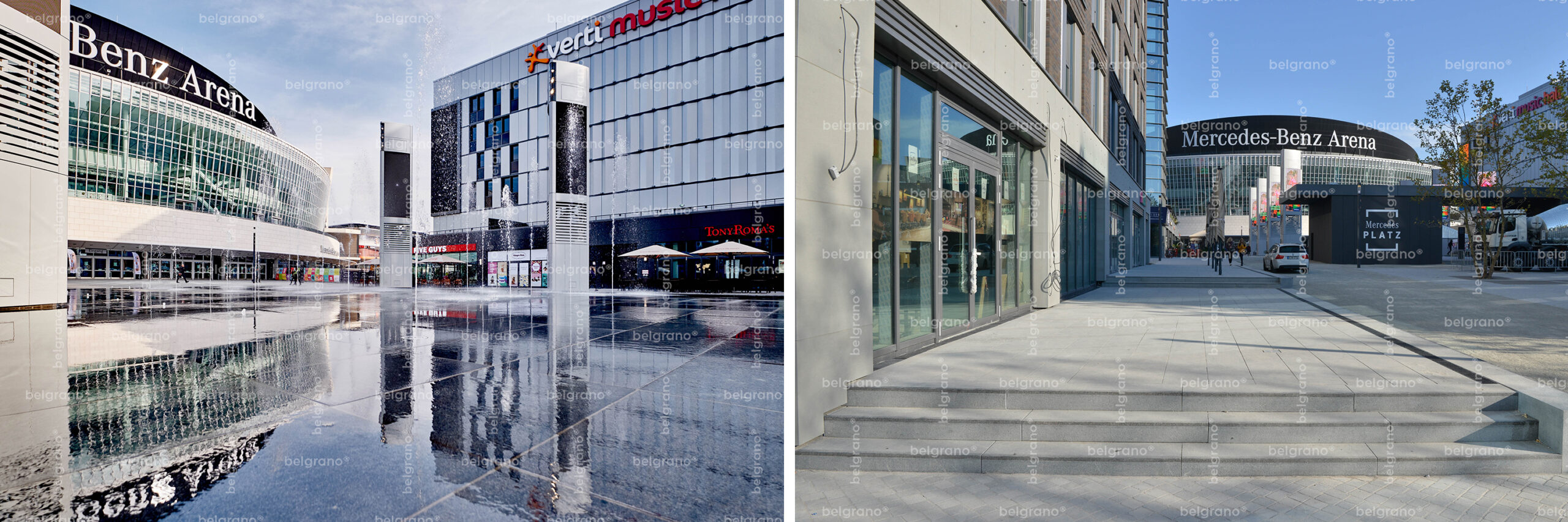
Mercedes-Platz (now Uber Platz), Berlin: How resilient natural stone is in demanding daily operations is demonstrated at heavily frequented urban hubs such as Mercedes-Platz in Berlin. The targeted use of belgrano® diorite continuously withstands the mechanical impacts of heavy goods and delivery traffic, massive visitor flows during major events and the permanent stress around integrated water features.
Economic Efficiency Through Modern Manufacturing
When discussing material choices with public decision-makers, initial investment costs often receive the greatest attention at first. Over several decades, however, a moderate additional purchase price is quickly offset, as costly refurbishment cycles are eliminated.
At the same time, processing technology today is significantly more efficient than in the past. The use of CNC saw lines, robotics and modern diamond tooling enables highly precise custom production at far more economical conditions than traditional processing methods once allowed.
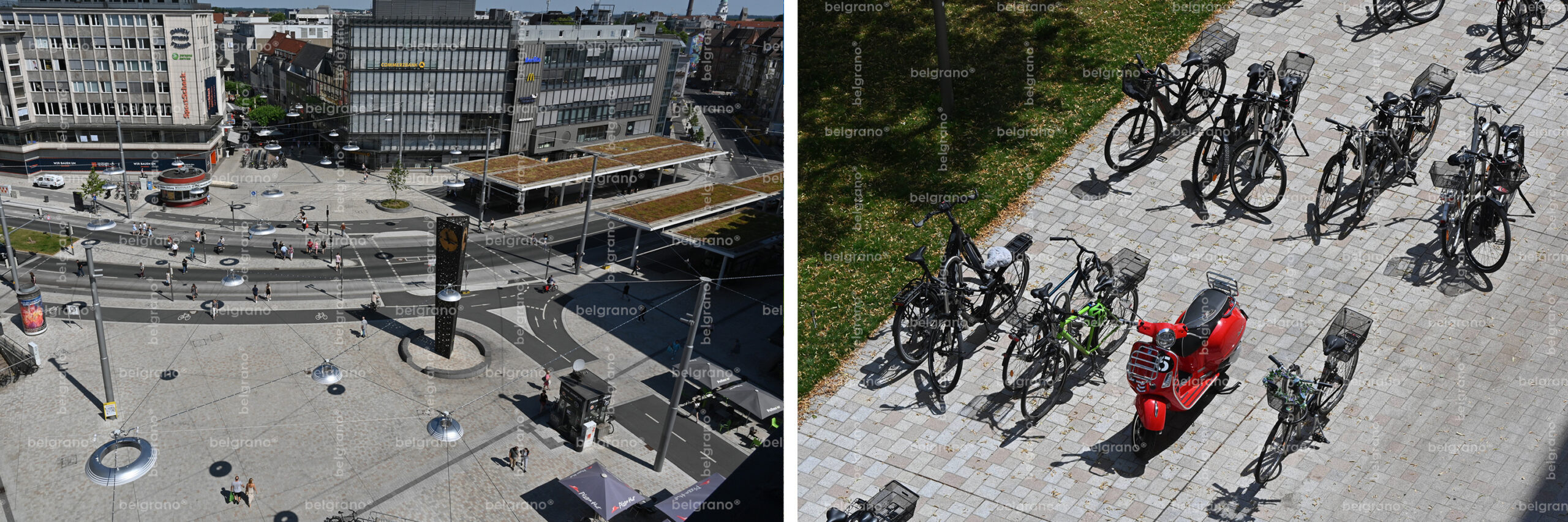
Jahnplatz, Bielefeld: Light grey-beige belgrano® natural stone paving in various granites was selected to create durable, level and cost-effective pedestrian surfaces around the city’s central public transport hub.
True Circularity Instead of Short Replacement Cycles
While many construction materials require costly replacement or downcycling after only one generation, natural stone naturally supports the principle of a circular economy. When laid in an unbound construction method, paving stones and slabs can be lifted decades later and reinstalled elsewhere in the urban area without any loss of quality. In any case, the material itself outlasts the service life of the paved surface.
As a pure natural product, belgrano® natural stone contains no artificial binders or polymers. In addition, since energy-intensive processes such as cement production are avoided, the material also convinces in EPDs with an excellent environmental profile.
Accessibility and Technical Performance
Public urban spaces must provide unrestricted and comfortable access for all user groups. The prejudice that stone paving is an obstacle to accessibility has long been overcome through modern manufacturing methods.
Through a targeted combination of different processing steps (precisely sawn and lightly textured on top, traditionally split on the sides), a planar, vibration-free surface is created. Planners thus receive the familiar, highly interlocked joint pattern of classic natural stone paving combined with optimal rolling and walking comfort.
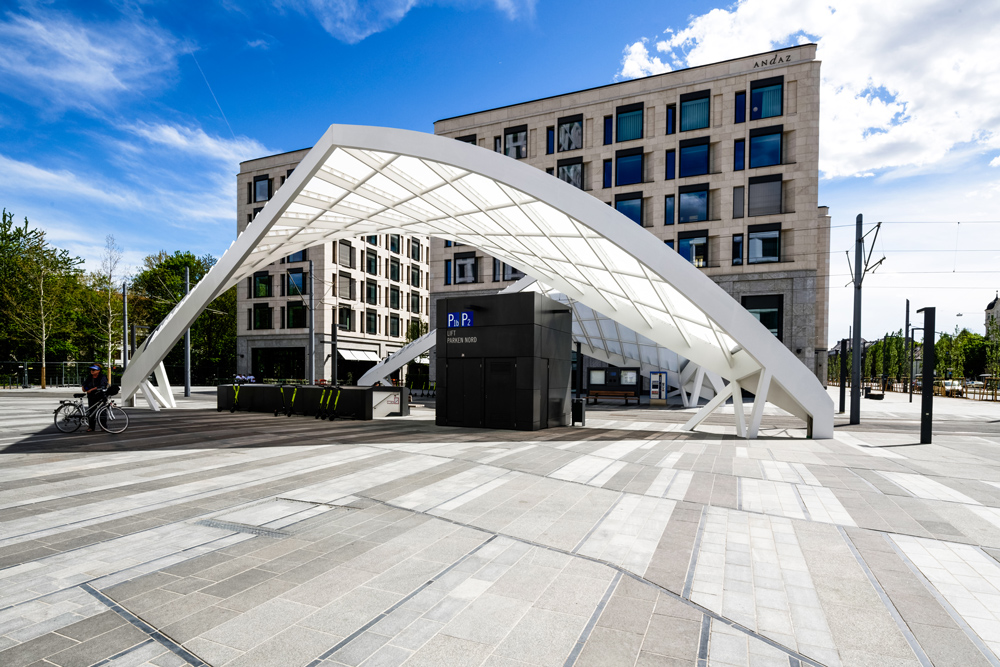
Schwabinger Tor, Munich: BESCO supplied more than 20,000 m² of belgrano® natural stone for this urban district along Leopoldstraße. In addition to paving and slabs, tactile guidance systems were integrated to ensure safe orientation throughout the public realm.
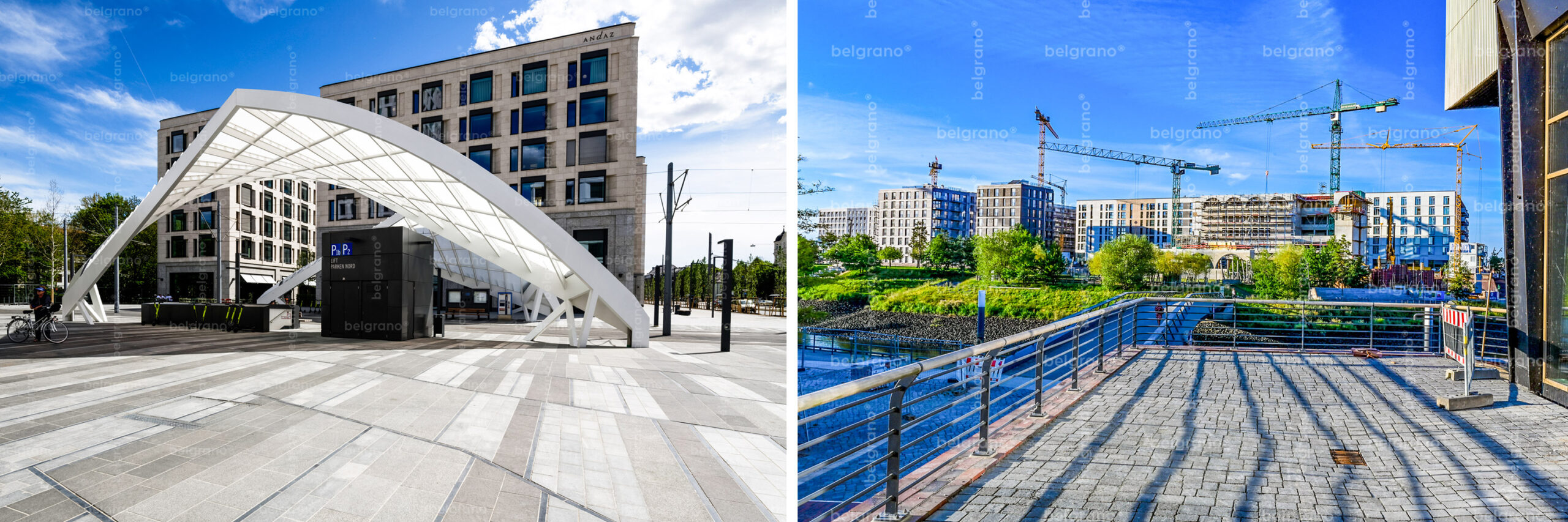
HafenCity, Hamburg: belgrano® basalt was selected for the design of the public spaces surrounding the harbour basin, creating a continuous connection between squares and promenades. Tactile guidance elements create ideal conditions for people with visual impairments.
Climate Adaptation: belgrano® Sponge City Solutions and Drainage
Increasing heavy rainfall events and flooding highlight the problem of heavily sealed surfaces in cities. The belief that natural stone automatically seals surfaces is a common misconception. Whether precipitation can infiltrate is a question of the overall system: permeable or vegetated joints allow rainwater to seep directly into the ground, reducing pressure on municipal drainage systems while replenishing groundwater resources.
At the same time, natural stone pavements counteract urban heat islands. Light-coloured stones reflect sunlight, while moisture stored within the joints evaporates and perceptibly cools the ambient air.
The decisive advantage of high-quality belgrano® hard stones: they absorb practically no water themselves. Even under permanently moist conditions within a sponge city system and extreme freeze-thaw cycles, the material remains completely dimensionally stable and frost-resistant.
Design Freedom and Lasting Urban Quality
High-quality materials significantly enhance the character and quality of stay in urban city centres. Beyond paving, natural stone can also be used for bespoke urban elements including seating, platforms, staircases, kerbs, retaining walls and fountains.
Thanks to various mineral compositions, a broad colour spectrum ranging from light grey to warm yellow and red tones through to anthracite is available. Surface finishes such as flaming, blasting or honing also allow for different visual and tactile effects.
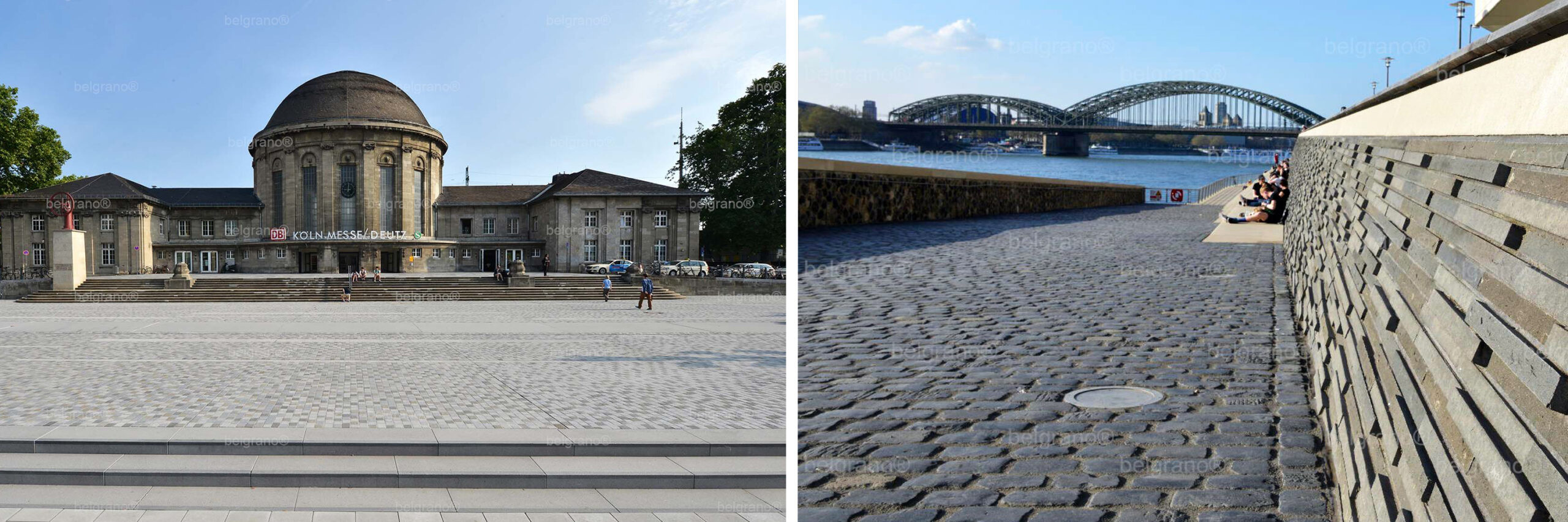
Rhine Boulevard & Ottoplatz, Cologne: For the design of the Rhine Boulevard in Cologne, BESCO supplied frost-resistant belgrano® basalt for wall cladding and facing masonry along the flood-protected dyke structures surrounding the riverside steps. The project received First Prize at the German Landscape Architecture Award 2017; the adjacent Ottoplatz was honoured in the category “Landscape Architecture in Detail”. A bespoke belgrano® material mix of selected hard stones was used throughout the entire square.
Planning a Public Realm Project?
Discover more information and references in our project database. Our team will be happy to advise you on technical details and the ideal belgrano® solution for your construction project. Simply send us your enquiry via our contact form or by email at mail@besco-gmbh.de. We will get back to you promptly.